

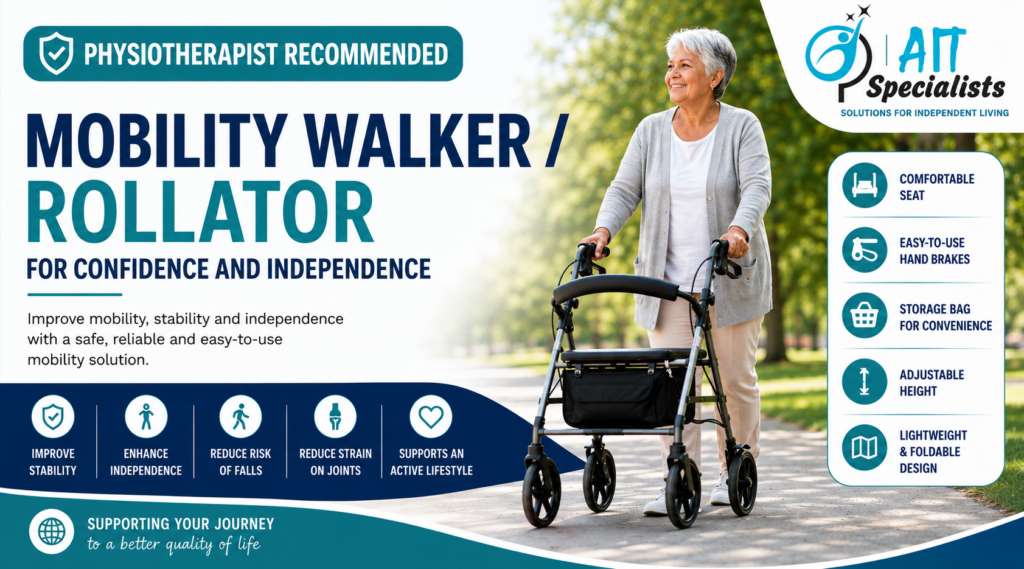
Mobility challenges can make everyday activities difficult, especially for seniors, people recovering from injuries, or individuals living with disabilities. Physiotherapists often recommend mobility walkers and rollators as effective assistive devices to improve balance, stability, and independence. These mobility aids are designed to support safe movement while reducing the risk of falls and strain on the body.
A mobility walker or rollator is more than just a walking aid — it is a tool that helps individuals stay active, confident, and engaged in daily life. Whether indoors or outdoors, these devices provide support that can significantly improve mobility and overall quality of life.
What Is a Mobility Walker / Rollator?
A mobility walker or rollator is an assistive device designed to help people walk safely and comfortably.
- Walkers usually have four legs and provide strong support for individuals with balance difficulties.
- Rollators are walkers with wheels, hand brakes, and often a built-in seat for resting during longer walks.
Physiotherapists assess a person’s mobility needs before recommending the right type of walker or rollator.
Why Physiotherapists Recommend Mobility Walkers and Rollators
Improved Stability and Balance
One of the main reasons physiotherapists recommend walkers is to provide extra balance support. They help reduce the chance of slips and falls, especially for older adults or people recovering from surgery.
Increased Independence
Mobility aids allow individuals to move around more confidently without relying heavily on caregivers or family members.
Reduced Pressure on Joints
Walkers and rollators help distribute body weight evenly, reducing strain on hips, knees, ankles, and the lower back.
Better Posture and Walking Pattern
Using the correct mobility aid can improve posture and encourage safer walking mechanics, helping users move more naturally.
Support During Rehabilitation
Physiotherapists often recommend mobility aids after surgeries, injuries, strokes, or neurological conditions to assist with safe rehabilitation and recovery.
Who Can Benefit from a Mobility Walker or Rollator?
A physiotherapist may recommend these mobility aids for people with:
- Arthritis or joint pain
- Balance issues
- Muscle weakness
- Stroke recovery
- Parkinson’s disease
- Multiple sclerosis
- Post-surgery rehabilitation
- Reduced mobility due to aging
Features of Modern Rollators
Today’s rollators are designed for comfort, convenience, and safety. Common features include:
- Adjustable handle height
- Lightweight folding frame
- Hand brakes for control
- Comfortable seat for resting
- Storage basket or pouch
- Large wheels for outdoor use
These features make rollators ideal for both indoor and outdoor mobility.
Choosing the Right Mobility Aid
Selecting the correct walker or rollator is important for safety and comfort. Physiotherapists consider several factors, including:
- User’s height and weight
- Balance and strength levels
- Indoor or outdoor use
- Frequency of use
- Medical condition and mobility goals
Professional guidance ensures the mobility aid matches the individual’s needs.
Benefits of Staying Active with Mobility Support
Using a mobility walker or rollator can encourage people to stay physically active. Regular movement helps:
- Improve circulation
- Maintain muscle strength
- Enhance mental wellbeing
- Increase social participation
- Build confidence in daily activities
Remaining active can greatly improve long-term health and independence.
Final Thoughts
Mobility walkers and rollators play a vital role in improving mobility, safety, and independence. Physiotherapists recommend these assistive devices because they help individuals move with greater confidence while reducing the risk of falls and injuries.
If you or a loved one are experiencing mobility difficulties, choosing the right mobility aid can make everyday life easier and safer. Professional advice from healthcare providers and assistive technology specialists can help you find the most suitable solution for your needs.